 editor
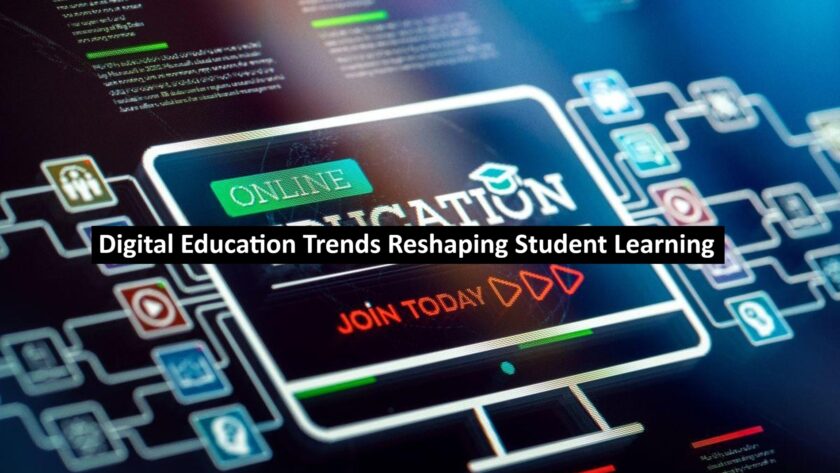
 Digital tools are enabling students to search for course materials in new ways, collaborate with teachers and peers, and acquire new abilities. The widespread use of online courses, AI, virtual classrooms, and dynamic learning tools are facilitating more adaptable and open learning experiences, altering conventional learning styles and empowering students to control when and how they learn.
More and more, a wider variety of teachers, learning resource professionals in schools and universities and trainers use digital learning systems which can provide staff with the tools needed to increase effectiveness and individualized learning experience.
Artificial Intelligence in Education
Another benefit of incorporating an AI-powered teaching approach is the integration and augmentation of a teaching role to bring the AI into education more readily, effectively, by providing personalization and the individual’s best interests to create a more dynamic learning space. From a learning and education point of view, AI technologies can support personalization, by the system being able to interpret data around student progress, track where a learning may occur at various learning rates, support students with their understanding via automated, consistent and individualised feedback, through to suggesting helpful or relevant learning tools and support for the individual student rather than following the entire cohorts learning pace.
Teachers can also use AI to automate tedious administrative tasks, help in the preparation of learning materials, and in understanding students’ academic performance. Nonetheless, responsible application of AI can be achieved through maintaining integrity and accuracy and through privacy concerns.
Read: NSW Families Guide: Combining Child Care Subsidy with Start Strong Fee Relief
Personalized Learning Experiences
Customised instruction can modify the education material for the learning speed, motivation and achieved results of the student. The system of an adaptive learning method has the ability to adapt the level of exercises or offer support resources to the student based on his replies to previous activities.
By giving students a clear picture of their strengths and weaknesses students can quickly work on the things they need more help with in an individualized manner as opposed to everyone taking an excessive amount of time on the same concepts. In these instances learning is personalized and can and will be more interesting and more effective.
Online and Hybrid Learning
Because of online learning, students can access classrooms and learning content from just about anywhere, no matter where they are, by utilizing video lectures, online work, forums, and virtual rooms.
Hybrid Learning “This approach blends online learning with the physical classroom model; still provides chances for teachers and classmates to meet and share knowledge directly, while also allowing more flexibility as necessary-especially useful for students who are employed or have similar commitments.
Interactive Digital Learning Tools
There’s a variety of tools designed to increase student’s participation, offering videos, quizzes, simulations, presentations and even games to illustrate the topics covered in the curriculum in new ways. Tools such as, these to aid comprehension are key to better engagement and learning.
There are many additional benefits of learning through interactions that include: Increases participation as an opposite of memorizing: Instead,students practice abilities, get quick responses on how they are doing and experiment with new knowledge using the games.
Virtual and Augmented Reality
Virtual and augmented reality, are in turn, opening up entirely new ways in the virtual learning that can make us able to walk in historical places, conducting a science laboratory virtually or looking at models of biology or testing some techniques before they come to use for example the work on one aspect of professional work at the heart of a simulated environment.
These can be particularly effective on topics that require physical or practical application. As hardware grows more common, virtual reality, and especially augmented reality technology may be introduced into classrooms.
Mobile Learning
Access to the teaching resources of schools or computer rooms have now been greatly broadened by both Smartphones and tablets computers; now pupils are all able to use the education and study materials through portable machines that have also enabled them to undertake further learning activities like listening to the lectures, performing exercises, and reading out a book and taking part of online chats.
Mobile learning can enable flexible timing for students to study and can enable continued learning during travel and while off-campus. Educational apps are a readily available way to have immediate access to practice exercises, language learning, dictionaries, and help with skill enhancement.
Digital Collaboration
Technology has helped make teamwork easier for students involved in group projects. Cloud documents, video conferencing, text messaging and digital project management allow students to share data and communication instantly.
Tools of the trade Teamwork, communication and time management- skills that are needed in any workplace and that all go hand in hand with remote collaboration, are now also being taught and practised by students through their virtual working. This is extremely beneficial given the ongoing shift in many organisations from office-based, to hybrid and remote working methods.
Focus on Digital Skills
As the workplace becomes more digitally connected, modern approaches to education seek to provide our youth with future readiness skills. Digital literacy; data interpretation and analysis; information security knowledge; effective communication; and familiarity with current technological solutions are now sought after in diverse career paths.
Education providers are now moving toward increased technological skills courses and practical training in order to cater for students needs. These skills will contribute toward students’ seamless move from academic institutions into careers.
Modern education is increasingly focused on preparing students for technology-driven workplaces. Digital literacy, data analysis, cybersecurity awareness, communication, and technology management are becoming valuable skills across many industries. Students pursuing healthcare careers can also use flexible digital education options to advance their qualifications, such as Capella RN to BSN programs for advancing a nursing career with purpose. Developing these skills can help students transition more confidently from academic environments into professional careers.
Future of Digital Education
Learning through digital environments is going to adapt and change, fueled with technologies of artificial intelligence, immersive, cloud-based and mobile technologies getting sophisticated. The learning spaces of the future may have to be ablend of face-to-face and blended learning solutions.
The optimal blend would harness technology but retain human mentorship. Teachers would still foster an emotional connect, communication, critical thinking and mentoring-technology can bridge the access divide, customize instruction, and improve learning efficiency.
Author’s Bio:
Lalit is a freelance content writer, blogger, and digital marketer with 6 years of experience. He writes clear, engaging content on the digital education market, SEO, technology, business, education, and market trends, making complex topics easy to understand and apply.